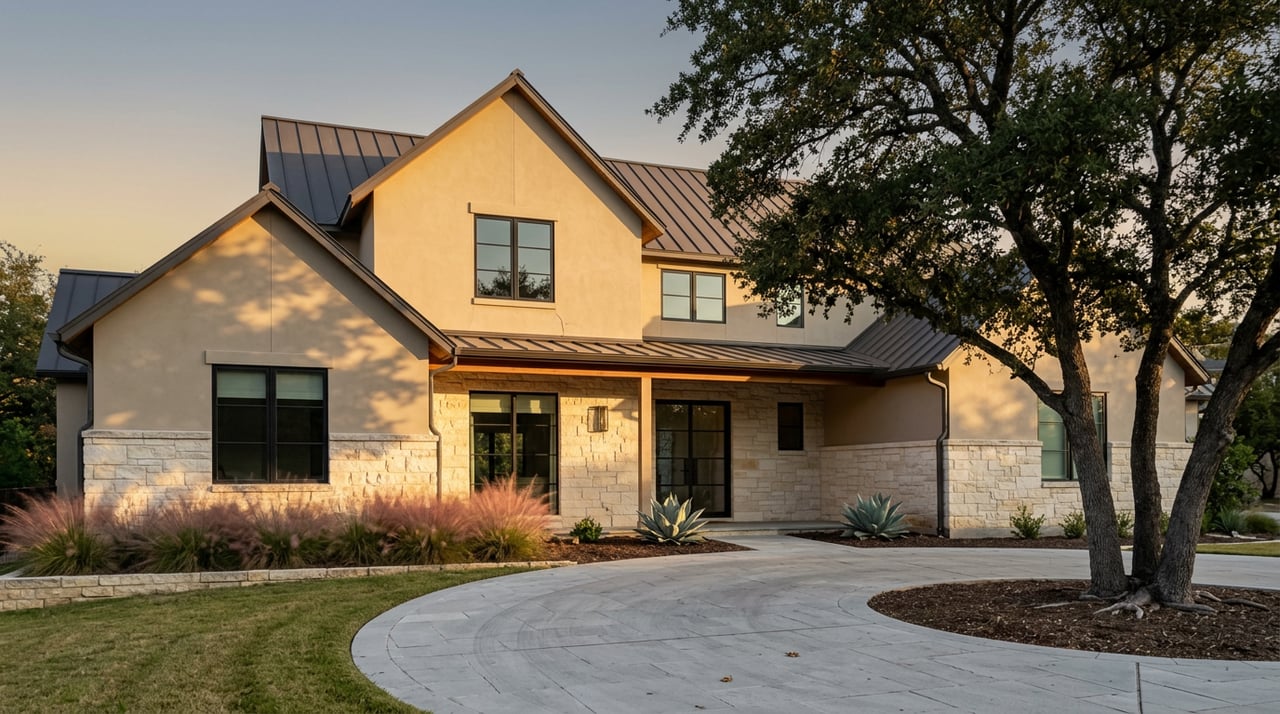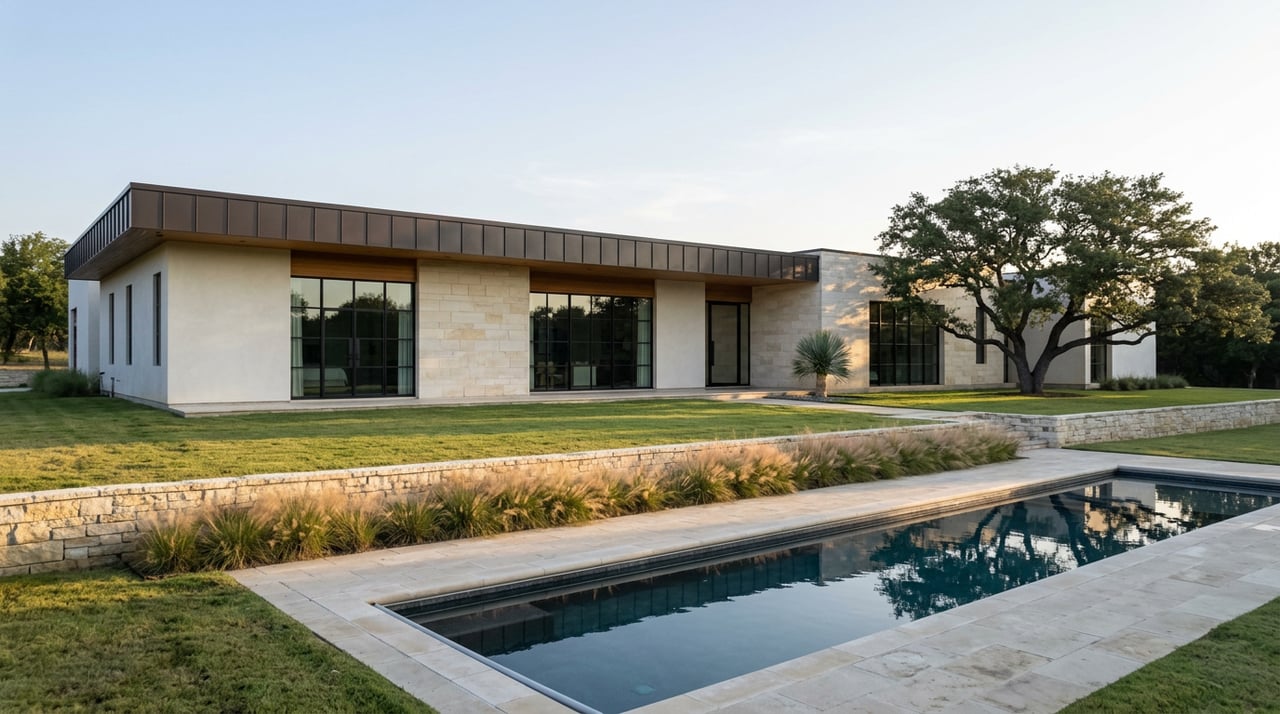
A buyer walks the gated streets of Spanish Oaks, tours a five-bedroom estate with Hill Country views and a spiral staircase, falls for it, and assumes the round of golf that goes with it is part of the package. It isn't. The house and the club are two separate transactions, cleared through two separate gates, and conflating them is the single most common mistake buyers make when they compare this community to Austin's other private golf enclaves.
That distinction matters for more than paperwork. It is also the quiet explanation behind a number that should surprise anyone shopping Spanish Oaks purely on price: homes here take roughly three times longer to sell than the national average. Not because demand is soft. Because the buyer pool gets filtered twice before a deal closes.
The Second Purchase Nobody Mentions in the Listing
Spanish Oaks Golf Club sits inside the gated community of the same name in Bee Cave, about 25 to 30 minutes west of downtown Austin off Bee Caves Road or Highway 71. The 18-hole course was designed by Bobby Weed, a former apprentice to Pete Dye, and it is walkable, with greens set close to the next tee across rolling limestone terrain.
None of that comes with the deed. Buying a home inside the gates does not automatically grant membership at the club. Membership is invitation-only, capped at roughly 300 golfing members, and requires a separate application after you already own the address. Some memberships carry waitlists. A buyer can close on a $4 million house in Spanish Oaks and still be waiting to hear back from the membership committee.
That gap between owning the address and joining the club is the thing most out-of-town buyers do not budget for, in money or in time.
What the Membership Actually Costs
As of Q1 2026, joining Spanish Oaks Golf Club runs approximately $150,000 to $200,000 in initiation fees, plus annual dues in the range of $18,000 to $24,000. That is on top of an HOA that typically runs $300 to $600 a month, and on top of whatever the mortgage costs.
Here is the piece that changes the math for a serious buyer: the initiation fee is structured as recoverable equity, not a sunk fee. Over a long hold, that equity structure can make the effective annual cost of membership comparable to golf clubs elsewhere that charge a lower upfront fee but never return a dime of it. A buyer comparing Spanish Oaks to a resort-style club on sticker price alone is comparing two different financial products, not two different prices for the same thing.
| Cost layer | Typical range (Q1 2026) | Recoverable? |
|---|---|---|
| Home purchase price | Roughly $1.5M to $10M+, varies widely by lot and view corridor | N/A |
| HOA dues | $300 to $600 per month | No |
| Club initiation fee | $150,000 to $200,000+ | Yes, structured as equity |
| Club annual dues | $18,000 to $24,000 | No |
A half-acre interior lot with no golf frontage is a fundamentally different product than a three-acre ridgetop estate overlooking the 14th fairway, even though both carry the same Spanish Oaks name. The price spread across the community exists precisely because "Spanish Oaks" describes a gate, not a single tier of house.
Why Homes Here Take Twice as Long to Sell
Over the past 12 months, homes in Spanish Oaks have sold after roughly 163 days on market, against a national average of 52 days. The median sale price during that window was $3,278,000, up 6 percent from the prior year. New construction tells a similar story: those homes took about 112 days to sell, against a 49-day national average, with a median of $3,500,000, up 18 percent year over year.
Read those two numbers together and the story is not that Spanish Oaks is losing appeal. Prices are climbing. What is slowing down is the match between house and buyer. A property here is not just being sold on square footage and finish level. It is being sold to someone who understands, going in, that the club membership is a second conversation, that a waitlist might apply, and that the invitation process runs on its own clock separate from the closing date. That extra layer of qualification takes time to work through, on both sides of the table, and it shows up directly in the days-on-market column.
For a seller, this is worth pricing into expectations from day one. A home in Spanish Oaks is not competing against the broader Bee Cave market on speed. It is competing against a much smaller pool of buyers who are comfortable with a two-part decision, and that pool takes longer to close in.
New Construction Runs on an Even Longer Clock
Buyers drawn to Spanish Oaks for a custom build face a third layer of timeline. An architectural design review committee enforces standards on square footage, materials, and landscaping across the community, which protects the consistency of the neighborhood but adds real time to a build. A custom home from lot purchase to move-in typically runs 18 to 24 months once a design is approved.
Stack that against the 112-day resale window for finished new construction and the picture becomes clearer: buyers who want a brand-new home here are either buying land and committing to a two-year build, or they are buying a recently finished spec home and accepting whatever design choices the builder already made. There is very little middle ground where a buyer gets both speed and full customization.
What This Means If You're Comparing Communities
If you are cross-shopping Spanish Oaks against Barton Creek or another Hill Country golf community, the honest comparison is not home price against home price. It is total carrying cost against total carrying cost, and timeline against timeline. Spanish Oaks trades a larger membership footprint elsewhere for a smaller, more tightly governed club of about 300 members with an equity-based fee structure. Barton Creek and similar resort-model clubs trade that equity return for broader amenities and faster access. Neither is the better answer in the abstract. The better answer depends on whether you are the buyer who wants a nearly guaranteed tee time on one exceptional course, or the buyer who wants variety and doesn't mind sharing it with a larger membership.
For a design-conscious buyer building custom, or a mover coming from out of state who wants a straightforward number to plan around, the club piece needs to be modeled separately from the mortgage from the very first conversation, not discovered after the offer is accepted.
Frequently Asked Questions
Does buying a home in Spanish Oaks include golf club membership? No. Home ownership and club membership are separate. Membership requires a separate invitation-based application, is capped at roughly 300 golfing members, and may involve a waitlist.
Why do Spanish Oaks homes take longer to sell than the Austin-area average? Recent 12-month data shows Spanish Oaks homes selling in about 163 days against a 52-day national average, and new construction closing in about 112 days against a 49-day national average. The gap tracks with the added step of matching buyers who are prepared for both the home purchase and the separate club application, not with weak pricing. Median prices rose over the same period.
What does it cost to live in Spanish Oaks beyond the mortgage? Plan on HOA dues of roughly $300 to $600 a month regardless of club status. If you pursue golf membership, add an initiation fee of $150,000 to $200,000, structured as recoverable equity, plus annual dues of $18,000 to $24,000.
If you are weighing Spanish Oaks against another Hill Country golf community, or trying to figure out what a specific lot or estate actually costs once the club math is built in, I would rather walk you through the real numbers before you write an offer than after. Linda Miller works with buyers and sellers across Austin's private club communities and can help you model the full picture, not just the listing price. Let's Connect.