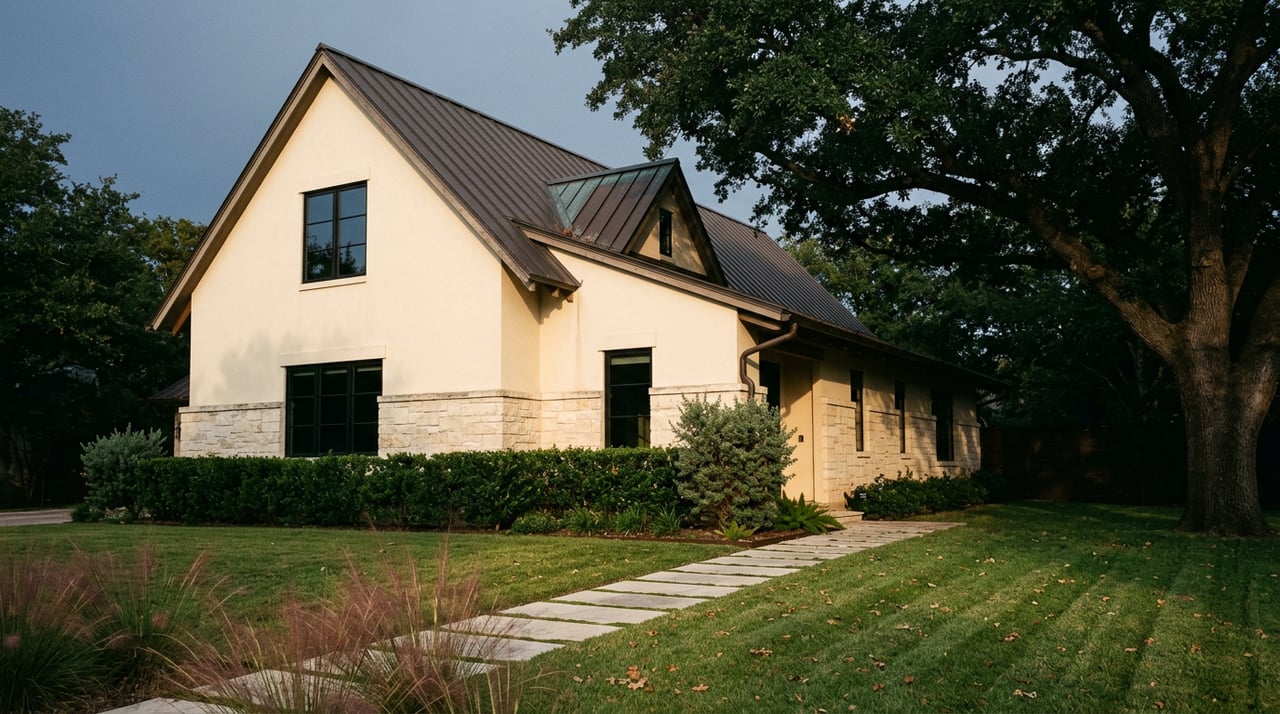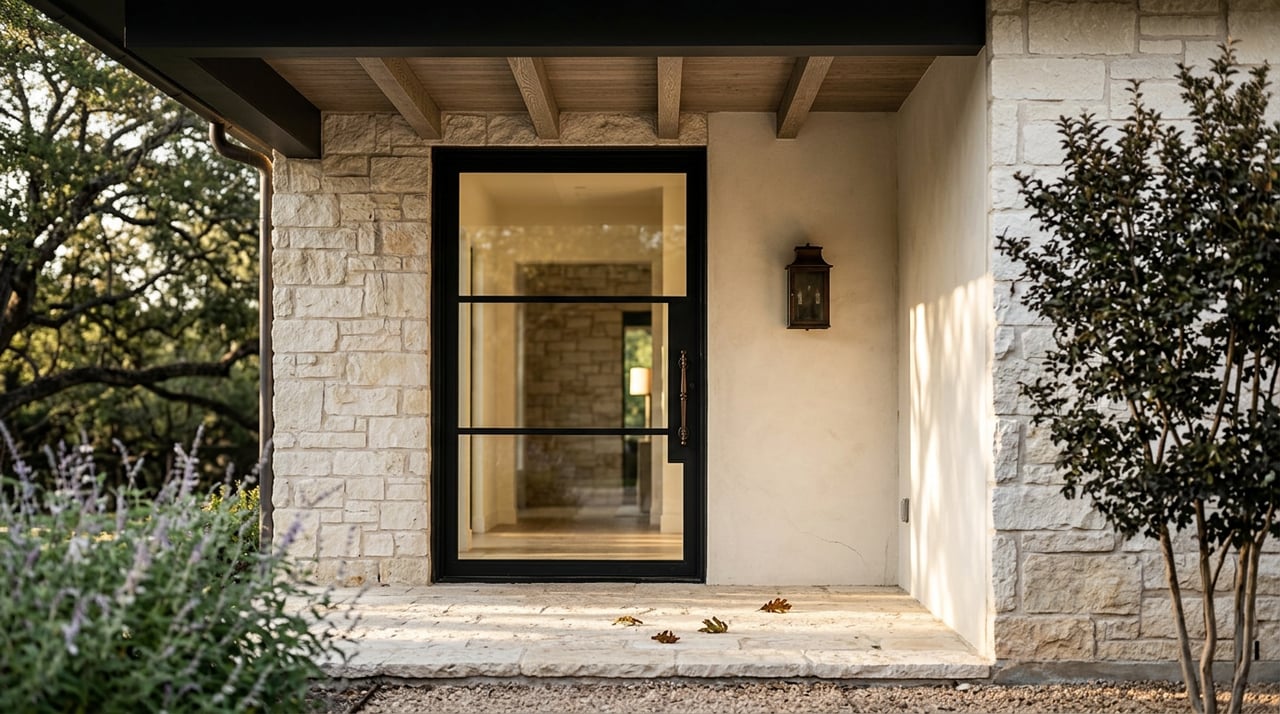
Which Pemberton Heights median are you supposed to believe?
Pull up four different sources on the neighborhood and you will get four different numbers, and none of them are lying to you. They are just answering different questions while using the same word: median. If you are comparing Pemberton Heights against Tarrytown or Old Enfield before you ever call an agent, that distinction matters more than any single figure on the page.
Four Different Middles
Here is what a buyer researching Pemberton Heights actually runs into:
| What's being measured | Reported figure | Time window |
|---|---|---|
| Trailing 12-month sold median | $1.96 million, down 11 percent year over year | 12 months ending December 2025 |
| Median asking price on active listings | $3.25 million | December 2025 snapshot |
| Broader estimated sold range across lot size and condition | $1.8 million to over $4 million | Early 2026 |
| Price per square foot, highest among surveyed Austin historic neighborhoods | over $1,000 per square foot | 12 months ending March 2026, flagged directional only |
None of these contradict each other in the way a data error would. They contradict each other because they are counting different pools of homes at different moments, and in a neighborhood this small, the pool barely exists.
Eleven Sales Is Not a Trend Line
Pemberton Heights holds roughly 600 homes and lots. An industry analysis published in the spring of 2026 counted only 11 closed sales across the entire neighborhood in the trailing twelve months. That same March 2026 price-per-square-foot survey went further and flagged its own Pemberton Heights figure as directional only, not statistically robust, because the sales feeding it numbered fewer than six.
Do the arithmetic on a market that small. One architecturally significant estate closing at $8 million and one teardown-ready lot closing at $1.3 million in the same quarter will swing a reported median by hundreds of thousands of dollars without a single thing changing about how the neighborhood actually trades. A median built on 11 transactions is not a trend line. It is closer to a coin flip that happens to have dollar signs attached.
Homes here also average 71 days on market, well past the roughly 53-day national average reported for the same period. That is not a sign of weak demand. It is what happens in a neighborhood where inventory is this thin and where, as multiple listing pages have noted, some of the most sought-after homes never make it to public listing at all. Slow, thin, and unusually specific is the normal condition here, not a warning sign.
So if the published median is mostly noise, what should a buyer or seller actually be comparing? The answer has nothing to do with square footage or lot size. It has to do with a word everyone throws around in Pemberton Heights without ever defining it: historic.
The Variable Nobody Puts in the Listing
Pemberton Heights sits inside the Old West Austin Historic District, a three-neighborhood district that also includes Old Enfield and Bryker Woods. Residents organized around 2000 and 2001, partly over a proposed MoPac expansion that threatened to demolish as many as 80 homes and partly over a rising number of individual teardowns, and their effort landed the district on the National Register of Historic Places in September 2003. Across all three neighborhoods combined, that listing covers 2,525 properties, of which 1,574 are classified as contributing to the district's historic character.
That single word, contributing, is where most of the confusion about "historic" actually lives. In practice, a Pemberton Heights address falls into one of three distinct categories, and each one changes what an owner can and cannot do to the exterior.
The automatic 45-year review. Any residential structure in Austin that is 45 years or older triggers a routine review by the city's Historic Preservation Office the moment an owner applies for an exterior permit or a demolition permit, regardless of whether the property carries any historic designation at all. Most Pemberton Heights homes were built between the late 1920s and 1960s, so this applies to nearly the entire neighborhood by default. Most projects clear this review within about five business days.
National Register contributing-structure status. This is what most Pemberton Heights homes carry simply by sitting inside the 2003 district boundary. It adds no design review for renovations. It does not tell you what siding you can use or whether you can add a second story. What it does add is leverage at the demolition stage: applications to demolish a contributing structure in a National Register district can be postponed for up to 180 days, compared with a standard delay of up to 75 days for a non-designated property of the same age.
Individual Austin Historic Landmark designation. This is the strongest layer, and it applies to a specific subset of Pemberton Heights, more than 40 homes by neighborhood tallies, including named landmarks like the Reed Estate on Harris Boulevard and Pemberton Castle, the 1890s former water tower turned gothic revival house that once served as the neighborhood's original 1927 sales office. Any exterior change to one of these, not just demolition, requires review and approval from the Historic Landmark Commission.
Interior renovation is unaffected by any of these three layers. The trigger, in every case, is exterior work, additions, relocation, or demolition.
What This Looks Like Next Door
The mechanics of that middle layer, contributing status without individual landmark protection, played out in a real case just across the district boundary. When an owner sought to demolish a contributing structure at 2307 Windsor, a neighbor who owned a Recorded Texas Historic Landmark nearby wrote directly to the city, invoking the exact provision built for this situation.
I respectfully urge you to initiate historic zoning, or invoke the 180-day demolition delay option available to Contributing Properties in National Register Historic Districts.
That single sentence is the whole three-tier system compressed into practice. The house was not individually landmarked, so the owner faced no design review requirement going in. But because it sat inside the National Register district as a contributing structure, a neighbor had a specific, named tool to slow the process down and force a public conversation before a demolition permit could be released.
The Questions Worth Asking About One Specific Address
If you are comparing Pemberton Heights to Tarrytown or Old Enfield using the published median, you are comparing three different regulatory realities as if they were one number. A more useful exercise, once you have a specific address in mind, looks like this:
Ask whether the home is individually landmarked, a contributing structure only, or simply old enough to trigger the automatic 45-year review with no formal status attached. The city's Historic Property Viewer will answer this directly. Each answer changes your renovation runway. An individually landmarked Tudor on Wooldridge Drive and a non-designated 1965 ranch two blocks away are not the same renovation project even if they sit on identically sized lots.
Ask what that status means for resale timing. A contributing structure that a future buyer might want to clear for new construction carries demolition-delay exposure that a non-designated home of the same age does not. That is worth knowing before you price a listing or write an offer that assumes a fast teardown.
And when you build a comp set, build it inside the same tier. A recent sale of a modest cottage priced at the lower end of the range may be trading almost entirely on land value, a buyer betting on eventually clearing the 45-year review rather than paying for the structure sitting on the lot today. Treating that sale as a comp for an individually landmarked estate a few doors down tells you very little about either property.
A Few Straight Answers
Does being in the historic district mean the city controls my kitchen remodel? No. All three layers of review described here apply to exterior work only. Interior renovation, including kitchens, is not subject to Historic Preservation Office or Historic Landmark Commission review.
My house has no individual landmark plaque. Does any of this apply to me? Likely yes, on two counts. If it is 45 years or older, the automatic citywide review applies to exterior permits and demolition regardless of designation. And if it is a contributing structure in the National Register district, which covers most of Pemberton Heights, the extended demolition delay still applies.
Is Pemberton Heights itself a City of Austin historic district? Not in the way many buyers assume. Pemberton Heights is one of three neighborhoods, along with Old Enfield and Bryker Woods, that together make up the Old West Austin Historic District listed on the National Register in 2003. That is a different, lighter designation than a City of Austin Local Historic District, which would layer its own design standards directly onto the property rather than triggering review only at the point of an exterior permit or demolition.
The median price on a Pemberton Heights listing will keep moving with every closing, because there are simply not enough sales in a given year to hold it steady. The designation tier attached to a specific address does not move the same way. It is fixed, it is knowable before you ever make an offer, and it tells you far more about what you are actually buying than any number a portal updates each quarter.
If you are weighing a Pemberton Heights address against another central Austin enclave, or trying to understand what a specific home's historic status means for your renovation plans or resale timeline, Linda Miller has spent two decades reading exactly this kind of nuance into Austin real estate. Let's Connect.